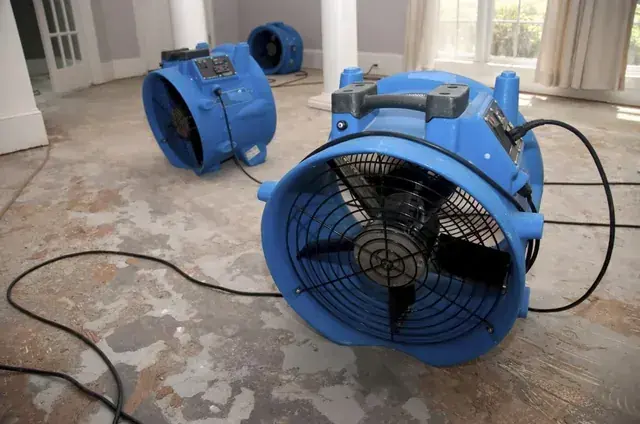
A water heater holds forty to eighty gallons, and when the tank corrodes through or a valve fails, all of it ends up on the floor, plus whatever keeps feeding in until the supply is shut off. In Miami these units often sit in a garage or a hallway closet, so the water spreads into living space fast. The crew extracts it and dries the slab and framing.
How water heaters fail in Miami
Tanks rust from the inside out over the years, and the first sign is often the flood itself. A stuck temperature-and-pressure valve or a failed supply connector can dump water just as fast.
Because heaters sit low, the water runs across the slab and under walls and door thresholds into adjacent rooms before you notice.
- A corroded tank that ruptures
- A failed T and P relief valve or drain valve
- Water spreading from a garage or closet into living space
What the crew does
The crew helps shut off the water and power to the unit, extracts the standing water, and moisture-maps how far it spread across the slab and into walls. Then it dries the area to a verified standard.
A water-heater flood is a clean-water loss that can often be dried with minimal removal, unlike a sewage backup, and the crew finishes with structural drying so nothing closes up damp.
- Emergency extraction from the slab
- Drying walls and thresholds the water crossed
- Claim-ready documentation for your carrier
Water heater flooded the garage?
The crew extracts and dries the slab and framing fast. Call the Miami line 24/7.
Preventing the next one
Water heaters last about eight to twelve years, so knowing the age of yours and replacing it before it fails avoids the flood. A drain pan with a leak alarm under the unit catches a slow failure early.
If yours is old or you see rust at the base, plan the swap before it lets go.
Maintain it before it fails
A maintained heater rarely floods. The Department of Energy covers water-heater care, and the IICRC sets the drying standard used after a failure.