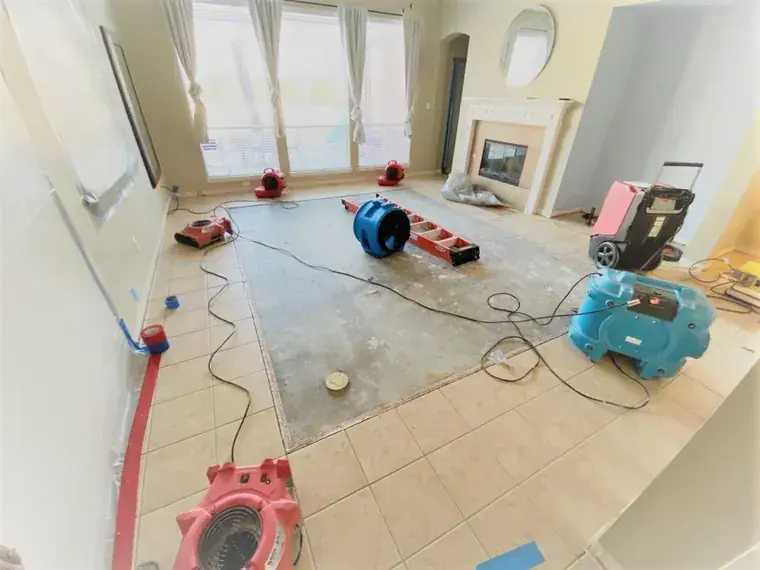
Extraction gets the water out, but drying is what actually saves a home, and it is the part most cleanups get wrong. Miami has some of the highest humidity in the country, so an open window or a household fan will not do it. The drying team dries wall cavities, slabs, and framing to a verified standard with commercial equipment and daily moisture readings.
Why Miami is the hardest place to dry
The same humid air that makes South Florida comfortable in winter makes it hard to dry a wet structure. Moisture that is not actively pulled out just sits in the walls and slab and feeds mold.
That is why the crew uses low-grain refrigerant dehumidifiers that keep working in high humidity, not just fans that move damp air around.
- Air that stays humid and slows evaporation
- Moisture trapped in wall cavities, slabs, and terrazzo
- Mold that starts fast in warm, damp materials
How the crew dries to a standard
The crew sets air movers to move moisture off surfaces and low-grain dehumidifiers to pull it out of the air, and contains the area so it is drying the structure, not the whole outdoors. It takes moisture readings daily and stops only when they confirm a dry target.
This is the finish step for every loss the crews handle, from a burst pipe to storm flooding, and it is what keeps mold from starting.
- Air movers plus LGR dehumidifiers
- Contained, monitored drying
- Daily moisture logging to a verified target
Was your home dried properly?
The drying team dries to a verified standard and logs the readings. Call the Miami line 24/7.
Why verified drying matters
A surface that feels dry can still hold moisture deep in the material, and closing a wall up damp leads to a mold problem later. Verified readings are the only way to know it is actually done.
The crew documents the readings so your insurer and you both know the structure reached a safe, dry standard.
The standard the crews dry to
Proper drying follows a recognized standard, not a guess. The IICRC publishes the water-damage standard the crews use, and the EPA explains why fast, complete drying stops mold.