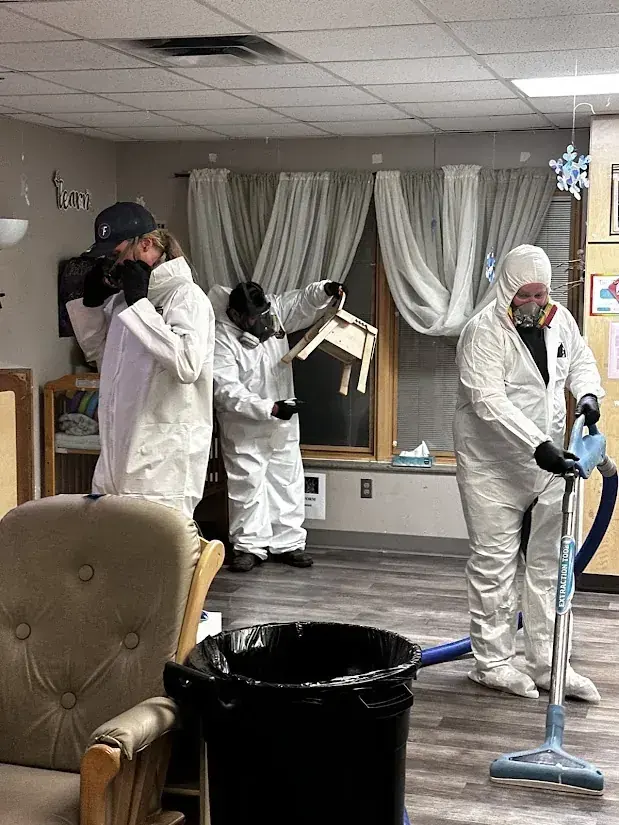
A sewage backup is the most hazardous water loss there is. Category 3 black water carries bacteria and pathogens, so it is a health hazard the moment it happens, not just a mess to mop up. In Miami, heavy rain surcharges city laterals and backs sewage up through floor drains and toilets. The crew handles it in full protective gear, disinfects, and dries it safely.
Why sewage is different
Black water contains bacteria, viruses, and other contaminants, so porous materials it touches, like drywall, carpet, and pad, usually cannot be saved and are removed above the water line and disposed of safely.
In Miami's heat, a backup also turns foul and starts breeding fast, so it needs a quick, professional response with the right personal protective equipment, not a household cleanup.
- Sewer laterals that surcharge in heavy rain
- Backups through floor drains, toilets, and tubs
- Contaminated drywall, flooring, and belongings
How the crew handles a backup
The crew arrives in protective gear, contains the area, and extracts the contaminated water. It removes and bags the porous materials the water soaked, then applies an EPA-registered antimicrobial to the framing and slab at its dwell time.
After the area is clean and treated, the crew dries it to a verified standard with structural drying. A backup during a storm often ties into ground-floor flooding too.
- Contained extraction of Category 3 water
- Safe removal and disposal of porous materials
- Disinfection, antimicrobial, and verified drying
Sewage backing up into your home?
Stay clear and call. The crew removes, disinfects, and dries it safely across Miami-Dade, 24/7.
Stay out of it until the crew arrives
Do not walk through or try to clean sewage yourself, and keep children and pets well away. Turn off any water source feeding the backup if you can, ventilate if it is safe, and call.
The crew handles the contamination properly so your home is safe, not just dry.
Treat sewage as a health hazard
Black water is a genuine health risk. The CDC covers safe handling of sewage and flood water, and the EPA covers the mold that follows if it is not dried.