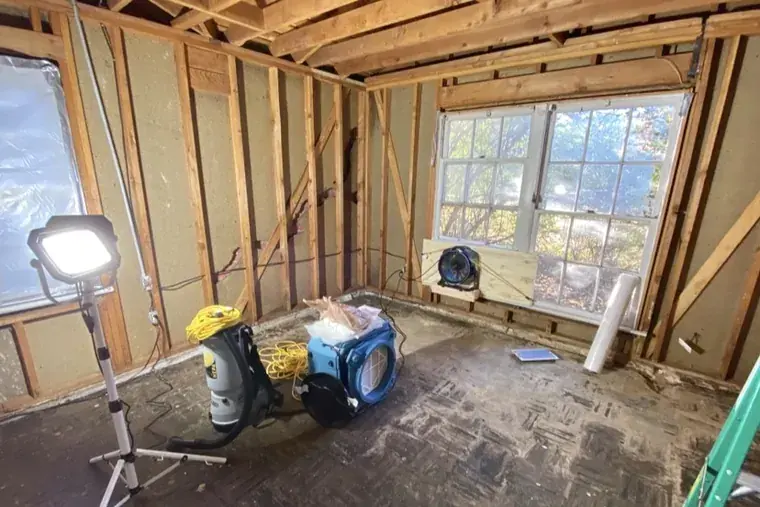
Miami homes have no basements, but plenty of them sit at or near ground level with little grade to carry water away. In a heavy summer downpour or a king tide, street and yard water finds the lowest opening and pours into ground-floor rooms and garages. The crew pumps it out, pulls the wet materials, and dries to the studs.
Why ground floors flood here
Flat terrain, high water tables, and storm drains that surcharge in a hard rain mean water backs up and spreads across yards and streets. A home with a low threshold or a garage at grade takes it in first.
This water often carries mud and street contaminants, so it is not just a matter of drying, it needs cleaning and disinfection too.
- Street and yard water over a low threshold
- Storm drains that surcharge in heavy rain
- Garages and ground-floor rooms at or below grade
How the crew handles it
The crew pumps out the standing water, extracts from the slab, and removes soaked drywall, baseboard, and insulation to a clean line. It disinfects where the water was dirty, then dries the framing and slab to a verified standard.
If the water is a sewage backup rather than storm runoff, the crew treats it as black water, and heavy storm events tie into storm and hurricane cleanup.
- Pump-out and slab extraction
- Removal of soaked porous materials
- Disinfection and drying to the studs
Water coming in at ground level?
The crew pumps, pulls, and dries to the studs. Call the Miami line 24/7.
Keeping water out next time
Sealing thresholds, adding removable flood barriers or sandbags before a storm, and keeping yard and street drains clear all help keep the next downpour outside.
Never store valuables directly on a ground-floor slab in a flood-prone spot.
Prepare before the next downpour
Know your flood risk and prep early. Ready.gov Floods covers barriers and safety, and the CDC covers safe cleanup after flood water.