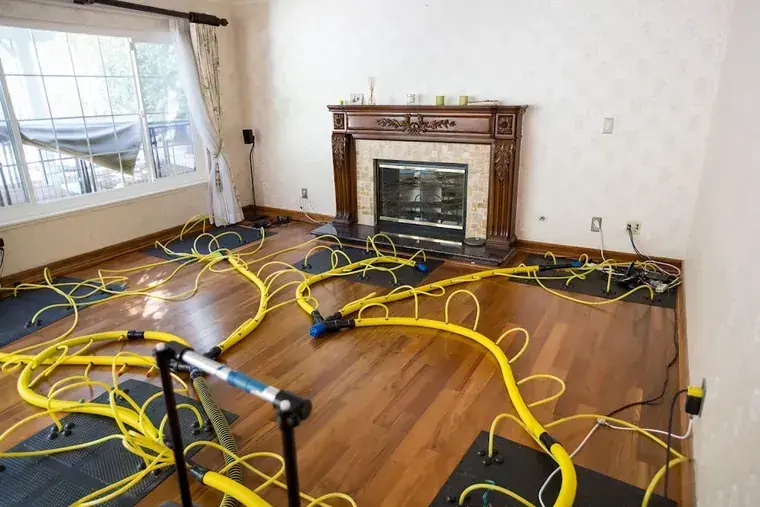
Some of the worst water damage in Miami starts with a small hose. A dishwasher, ice-maker, or washing-machine supply line lets go and soaks the floor and cabinets for hours before anyone notices, usually overnight or while the house is empty. The crew dries the cabinets, subfloor, and walls before it turns to mold.
Why appliance leaks do so much damage
The braided or plastic supply lines behind an appliance are always under pressure, and they fail at the connector or split with age. Because the leak is hidden behind or under the unit, it runs unseen and wicks into the cabinet base and subfloor.
By the time the floor warps or a musty smell appears, the water has usually spread well past the appliance.
- Dishwasher and ice-maker supply lines
- Washing-machine hoses and connectors
- Water spreading under cabinets and into the subfloor
How the crew dries it out
The crew stops the leak, pulls the appliance, and moisture-maps how far the water traveled. It dries the cabinet interiors, toe-kicks, and subfloor, drilling small vent holes where needed rather than tearing out good cabinetry.
If the line that failed is a fixed plumbing supply rather than an appliance hose, the crew treats it like a burst pipe, and finishes with verified structural drying.
- Cabinet, toe-kick, and subfloor drying
- Targeted drilling to dry without gutting
- Antimicrobial treatment where water sat
Floor warping near an appliance?
The crew dries the cabinets and subfloor before mold starts. Call the Miami line 24/7.
Catching it earlier
Replacing rubber hoses with braided steel, checking connectors once a year, and adding a simple leak alarm under the sink or behind the washer catches the next one early.
If you find a warped floorboard or a soft cabinet base, call before it spreads further.
Small leaks, real mold risk
Slow appliance leaks are a classic mold source. The CDC mold resources explain the health risk, and the IICRC sets the drying standard the crews use.